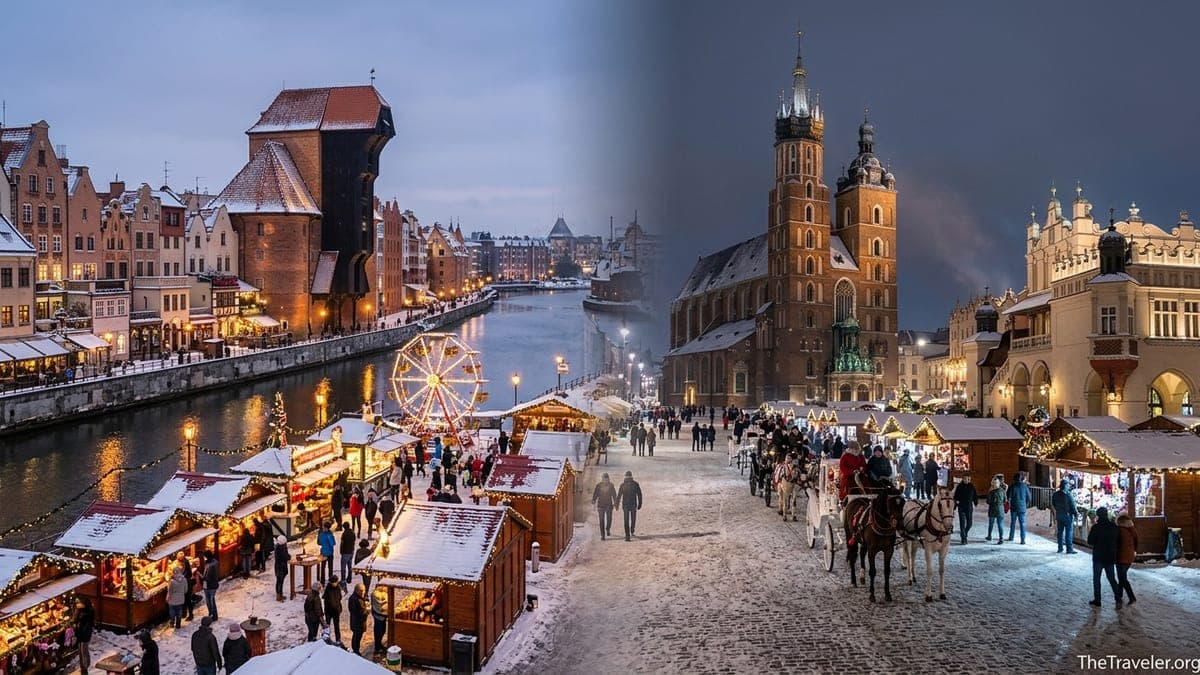
Two Polish cities, two very different winter moods
Poland's winter city break scene is largely split between two contenders: Baltic Gdańsk, with its shipyard cranes, Hanseatic facades and Solidarity heritage, and inland Kraków, built around a medieval royal square and centuries of cultural layering. Both reward a December or January visit, but the experience on the ground is distinct enough that the choice matters. The Traveler published a detailed head-to-head comparison covering atmosphere, sights, weather, transport and budgets, and the findings are worth unpacking for anyone still deciding.
Atmosphere and crowds
Gdańsk feels compact and maritime. The rebuilt Long Market, the Motława waterfront and the former Lenin Shipyard sit within easy walking distance of each other, and outside Christmas market weekends the Old Town can be genuinely quiet on weekday evenings. Kraków draws visitors year-round; even in January, Rynek Główny shares space with tour groups, and advance tickets for Wawel Castle and the Schindler's Factory museum are strongly advised.
Museums and key sights
Gdańsk's two flagship institutions are the Museum of the Second World War, with adult tickets roughly in the 40 to 60 złoty range, and the European Solidarity Centre, where the permanent exhibition runs around 30 to 40 złoty. Both use timed entry on busy days, and online booking is sensible for December visits. Smaller branches of the municipal museum network, including the Amber Museum, are rarely crowded in winter and usually cost under 25 złoty.
Kraków's Wawel Castle organizes visits as separate ticketed routes, each typically 35 to 55 złoty, with a combined pass available at a higher price. The Schindler's Factory exhibition uses capped time-slot entry at just over 30 złoty per adult; online reservations sell out quickly even in winter. St Mary's Basilica charges a modest fee under 20 złoty for tourist entry outside services.
Christmas markets and timing
Gdańsk's 2024 market on Targ Węglowy ran from 22 November to 23 December. Kraków's market on Rynek Główny extended from 24 November to 1 January, meaning early January visitors still find stalls and mulled wine around the Cloth Hall. For the best balance of festive atmosphere and manageable crowds, an early December midweek stay works well in either city. Late January weekends offer lower hotel rates and thin crowds, especially in Gdańsk once the market has closed.
Weather and practicalities
Both cities see daytime highs of roughly 1 to 3 degrees Celsius from December through February. Gdańsk's Baltic wind chill makes exposed waterfront walks feel colder than the thermometer suggests; windproof layers and waterproof shoes are essential. Kraków's Old Town is more sheltered, but temperature inversions on still days can trap smog, and cobblestones in Kazimierz become slippery when icy. Sunset falls around mid afternoon in December in both cities, so morning and early afternoon are the best windows for outdoor exploration.
Getting there and getting around
Low-cost carriers serve both Gdańsk Lech Wałęsa Airport and Kraków John Paul II Airport from London, Scandinavian capitals and several German cities, with Kraków generally seeing higher frequencies. Airport rail links exist in both cities: the PKM suburban train into Gdańsk costs under 10 złoty; the Kraków airport rail link runs around 17 złoty for a roughly 20-minute ride to the central station. Urban tram and bus single tickets are under 5 złoty in Gdańsk and around 6 to 8 złoty in Kraków depending on duration.
Day trips worth planning
From Gdańsk, Sopot is a 15 to 20-minute suburban train ride for around 7 to 10 złoty. The pier and beach make a pleasant half-day even in winter, though sea winds are sharp. From Kraków, the Wieliczka Salt Mine is the standard side trip: roughly 20 to 30 minutes by suburban train, but the guided tour itself costs around 130 to 150 złoty for a foreign-language group, and a realistic door-to-door schedule is about five hours.
Costs at a glance
Central three-star hotels in Gdańsk typically run 250 to 350 złoty per night in mid-winter, rising above 400 złoty during market weekends. Comparable Kraków properties near Rynek Główny tend to start around 300 to 450 złoty in January, with higher peaks around the market and New Year period. Food costs in traditional restaurants are broadly similar between the two cities.
Why it matters for hosts
Independent accommodation operators in both cities face a pronounced pricing window: the gap between Christmas market peak rates and the quieter weeks of mid-January and February is significant. Hosts who build mid-week or late-January packages around museum itineraries, or who partner with local guides for Solidarity history walks in Gdańsk or Kazimierz evening tours in Kraków, can attract the value-focused traveler who actively avoids the December rush. Communicating accurate winter transport details, including airport rail options and tram passes, in pre-arrival messaging also reduces friction for first-time visitors unfamiliar with Polish cities.
Details in this post were first reported by The Traveler in their winter city break comparison of Gdańsk and Kraków. This post is published by the Qontaktly travel blog.
First reported by thetraveler.org.