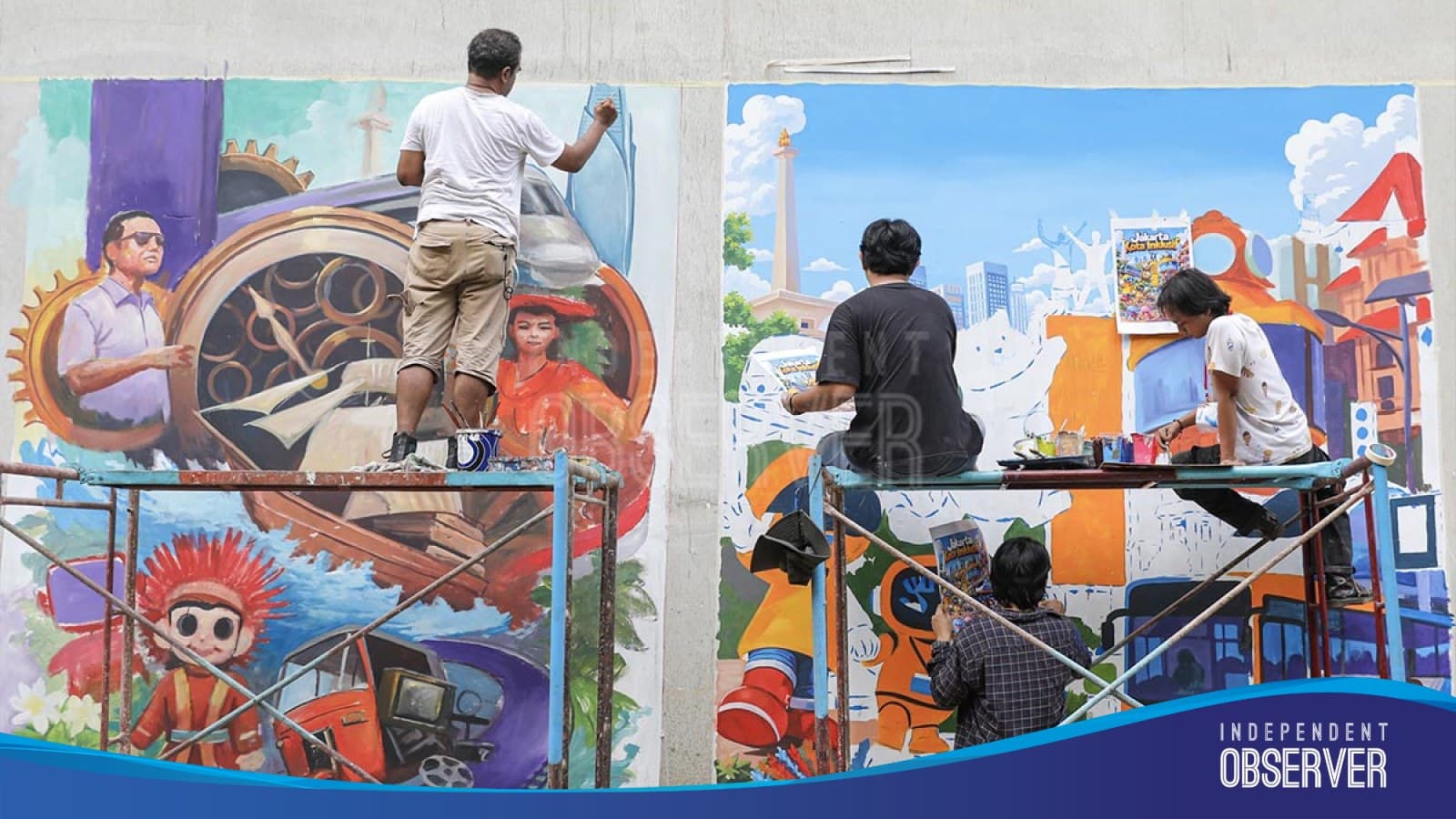
A public art competition in Jakarta has given visual form to how artists imagine the capital's future. The Jakarta Cultural Mural Festival 2026, held at Taman Ismail Marzuki in mid-November, invited selected groups to paint murals on the theme "Jakarta Tomorrow, Our Hope."
The event drew significant interest from the creative community. Organizers received 101 applications, from which 20 groups were chosen to participate. The selected teams represented a broad geographic range, including Jakarta itself, Bali, Magelang, Semarang, and Wonosobo, as well as several cities across Greater Jakarta.
Artistic visions of a changing capital
The timing of the festival is significant. Jakarta is approaching its 500th anniversary, and the competition gave artists a prompt to explore what the city might become. The resulting murals engaged with a variety of themes relevant to contemporary urban life in Indonesia.
Some works focused on urban development and transportation, reflecting the daily realities of mobility in a megacity. Others turned to cultural heritage, depicting prominent Betawi figures who remain central to Jakarta's identity. The range of subjects suggests that artists see the city's future as a balance between infrastructural modernization and the preservation of local traditions.
Taman Ismail Marzuki, a well-established arts center in Jakarta, served as the venue. The location placed the festival at the heart of the city's cultural infrastructure, making the murals accessible to the public and situating street art within a recognized framework of cultural expression.
Street art as civic dialogue
The festival positions mural art not just as decoration but as a form of civic dialogue. By asking artists to visualize "Jakarta Tomorrow," the event created a platform for creative professionals to contribute to conversations about the city's direction. The theme encouraged forward-looking perspectives while remaining rooted in local context.
The inclusion of artists from outside Jakarta, including teams from Bali and Central Java, also suggests that the capital's future is a subject of broader regional interest. The diversity of participating groups added varied artistic sensibilities to the mix.
Why it matters for hosts
Independent hospitality operators in Jakarta can leverage events like this to connect guests with local culture. The murals at Taman Ismail Marzuki offer a free, accessible attraction that speaks to how Jakartans view their own city. Properties located near the venue or in neighborhoods with strong street art presence can incorporate these visual narratives into guest recommendations, providing an authentic perspective on the city that goes beyond standard guidebook highlights. Staff who understand the themes in the murals can share that context with visitors, adding depth to a seemingly simple walk through the neighborhood.
This article is based on reporting by the Independent Observer, which first published details on the Jakarta Cultural Mural Festival 2026.
First reported by observerid.com.