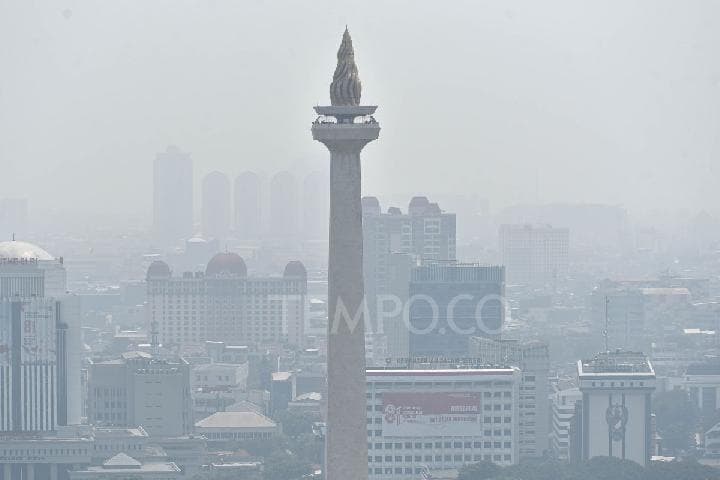
Air quality in Jakarta reached unhealthy levels for sensitive groups on a Friday morning in November, according to data from the monitoring platform IQAir. The Indonesian capital recorded an Air Quality Index (AQI) reading of 143 at 7:30 a.m. local time, placing it eighth among cities with the worst air quality worldwide that day.
The reading put Jakarta behind Lahore, Pakistan, which topped the global ranking with an AQI of 309. Delhi, India, followed at 228, and Cairo, Egypt, recorded 185. The AQI scale categorizes readings between 101 and 150 as "unhealthy for sensitive groups," meaning that while the general public is less likely to be affected, people with respiratory conditions, children, and older adults may experience health effects.
Residents were advised to wear masks when engaging in outdoor activities as a precautionary measure.
Government Response and Transit Expansion
The Jakarta provincial government is implementing three main strategies to improve the capital's air quality, with a focus on reducing reliance on private vehicles. One key measure involves expanding Transjabodetabek bus services.
New and planned routes include Blok M to Alam Sutera and Blok M to PIK 2. A proposed route connecting Blok M to Soekarno-Hatta International Airport is also under consideration. These expansions aim to provide more options for commuters traveling between Jakarta and the greater metropolitan area.
Jakarta Governor Pramono Anung has encouraged residents to make greater use of public transportation provided by the provincial administration. To support this, the government has introduced a policy offering free public transport services to 15 categories of residents, though the specific categories were not detailed in the report.
Connectivity and Regional Standing
Jakarta's public transportation network currently has a connectivity rate of 92 percent. This places the capital 17th globally and second in ASEAN, behind Singapore, in terms of transit connectivity.
The push for expanded public transit comes as Jakarta continues to grapple with air quality challenges that regularly place it among cities with significant pollution concerns. Vehicle emissions remain a major contributor to poor air quality in the metropolitan area.
Why it matters for hosts
Independent hospitality operators in Jakarta should consider providing complimentary masks for guests and posting daily air quality updates in common areas. Properties near new Transjabodetabek routes, such as those serving Blok M, may see increased appeal among travelers seeking alternatives to private car travel. Highlighting proximity to public transit and offering guidance on the free transport policy for eligible residents can help hosts attract guests who prioritize health and convenience.
This report was first published by Tempo, based on data from IQAir and reporting from Antara.
First reported by en.tempo.co.