Bandung has drawn travelers for generations with its cool highland climate and colonial architecture, earning it the enduring nickname 'Paris van Java'. Less known to casual visitors is a musical institution that has spent 60 years turning bamboo into cultural ambassadorship, one shaken note at a time.
Saung Angklung Udjo sits in the Padasuka neighborhood, roughly seven kilometers from the city center. The late Udjo Ngalagena, known as Abah Udjo, and his wife Uum Sumiati founded the center in 1966. What began with 10 family members performing in a modest courtyard has grown into a cultural complex spanning approximately two hectares.
The angklung itself is a traditional instrument made of bamboo tubes suspended in a frame. When shaken, each tube produces a specific pitch. Played in groups, the instruments blend into harmonious melodies. The sound is distinct, but the story behind its modern revival is equally notable.
Udjo studied under Daeng Soetigna, a musician who developed the diatonic angklung in 1938. This innovation expanded the instrument's musical range. Udjo performed with an ensemble at the 1955 Asian-African Conference in Bandung before launching his own instrument-making venture in 1961. In the early years, he cycled through the city after his teaching duties, handing out bamboo promotional cards to hotels and travel agencies to draw audiences to his family courtyard.
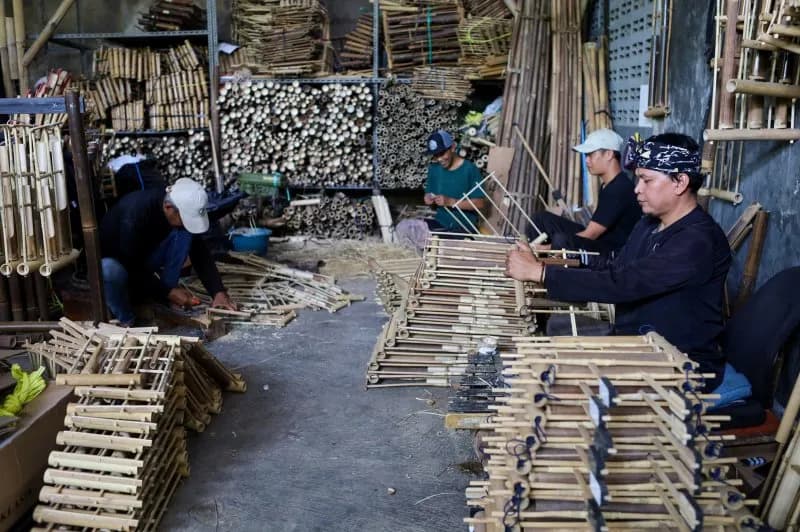
Today, the center involves about 600 performers, with Udjo's children, grandchildren, and great-grandchildren continuing the family tradition. Visitors can watch performances, try playing the angklung themselves, and observe bamboo craftsmanship. The site also cultivates various bamboo species at a separate location called Udjo Ecoland for preparation and drying.
The instrument received UNESCO recognition in 2010 when Indonesian angklung was inscribed on the Representative List of the Intangible Cultural Heritage of Humanity. This came nine years after Udjo's death but cemented the global status he had worked toward.
Saung Angklung Udjo now describes itself as among the world's largest angklung production centers. A team of seven to 10 craftsmen produces roughly 20 instruments daily, with output fluctuating based on overseas orders. Japan represents the largest export market, as the angklung has been incorporated into school curricula there. Malaysia is another key destination, both for instrument sales and for a training-of-trainers program that certifies participants to teach elsewhere.
The angklung's roots run deeper than performance. Traditionally, Sundanese communities used it in agricultural rituals honoring Dewi Sri, the rice goddess, seeking fertile land and abundant harvests. That spiritual dimension adds context to what visitors experience today.
Why it matters for hosts
Independent operators in Bandung can position Saung Angklung Udjo as more than a standard attraction. Guests increasingly seek experiences they cannot replicate elsewhere, and this center offers hands-on engagement with a UNESCO-recognized tradition. Hotels and homestays can differentiate their local recommendations by highlighting the workshop element, the family legacy, and the option for visitors to play the instruments themselves. For properties hosting guests from Japan or Malaysia, mentioning the center's export connections and training programs creates an unexpected point of familiarity and pride.
This article draws from reporting by Malay Mail, which first published these details.
First reported by malaymail.com.